



The Rise of Premium Espresso: What the Shift Means for You

Something is happening in coffee right now, and it goes deeper than a seasonal menu swap. Consumers across the country are quietly walking away from the automatic drip machine and reaching for something richer, more layered, and more intentional. Lattes. Macchiatos. Cortados. The kind of drinks that start with a properly pulled espresso shot.
Data from Google Trends and Daily Coffee News confirms what many of us already sense: this is not a trend. It is a recalibration. People want more from their coffee, and they are willing to learn how to get it.
Why Consumers Are Moving Toward Espresso
The numbers are clear. Search interest in espresso-based drinks has climbed steadily through early 2026, with lattes and macchiatos leading the charge. Daily Coffee News has tracked a parallel rise in specialty espresso equipment sales, suggesting this is not just café curiosity—people are investing in the experience at home.
Part of this is cultural. The pandemic-era home brewing boom gave millions of people a real education in coffee quality. Once you taste the difference between a flat, over-extracted drip cup and a well-balanced espresso with a thick, caramel-colored crema, it is hard to go back. The bar has moved.
"People aren't just drinking coffee anymore—they're experiencing it. The shift toward espresso is really a shift toward intentionality." — Consumer sentiment reflected across specialty coffee forums and Google Trends data, May 2026
There is also a sophistication factor at play. Espresso-based drinks reward attention to detail—the grind, the dose, the tamp, the pour. That process appeals to a generation of consumers who want to understand what they are drinking, not just consume it.
What Actually Makes Espresso Different
Espresso is not a roast level. It is a brewing method. Hot water is forced through finely ground, tightly packed coffee at high pressure—typically around 9 bars—in a very short window of time. The result is a small, concentrated shot with a complexity that drip coffee simply cannot replicate.
That concentration is what makes espresso the foundation of so many beloved drinks. The bold, slightly bitter backbone of a well-pulled shot holds its own against steamed milk in a latte, cuts through sweetness in a macchiato, and stands alone as a straight shot with remarkable depth.
The Role of the Bean
Not every coffee bean performs equally under espresso pressure. Beans roasted for espresso are typically developed to a level where natural sugars have caramelized, oils have migrated to the surface, and the flavor profile has shifted toward chocolate, nuts, and dark fruit rather than the brighter, more acidic notes common in light roasts. The roast matters enormously—and so does the sourcing.
At Koffee Kult's Hollywood, FL roastery, every batch is roasted in small quantities to preserve the integrity of the bean and give the roaster precise control over development. That attention to process is what separates a forgettable shot from one that stops you mid-sip.
Espresso Drinks Decoded: A Quick Field Guide
The espresso menu can feel overwhelming if you are new to it. Here is what you actually need to know about the drinks driving this trend.
The Classic
Latte
One or two shots of espresso topped with steamed milk and a thin layer of microfoam. The milk softens the espresso's intensity while letting its flavor come through. The most popular espresso drink in the U.S. by a wide margin.
The Bold One
Macchiato
Espresso "stained" with a small amount of steamed milk or foam. Much less milk than a latte, so the espresso character dominates. A great choice for anyone who wants the complexity of espresso without diluting it.
The Middle Ground
Cortado
Equal parts espresso and warm milk, served in a small glass. The milk cuts the acidity without masking the bean's flavor. Growing fast in specialty coffee circles as a more refined alternative to the latte.
The Purist's Choice
Straight Shot
No milk, no additions. Just 25–30 ml of concentrated espresso with a golden crema on top. The most honest test of your bean and your technique. If the shot is good, it needs nothing else.
The Technical Side: Brew Ratios, Temps & Timing
Getting espresso right at home is mostly about consistency. These are the numbers that matter.
- Brew ratio: 1:2 is the standard starting point — 18g of ground coffee in, 36g of liquid espresso out. Adjust to taste.
- Water temperature: 195°F–205°F (90°C–96°C). Too cool and the shot under-extracts; too hot and it turns bitter.
- Extraction time: 25–30 seconds from the moment water contacts the puck. Shorter = sour and weak. Longer = bitter and harsh.
- Pressure: 9 bars is the industry standard. Most home machines are pre-set; semi-professional machines allow adjustment.
- Grind size: Fine, but not powder. Think table salt, not flour. A burr grinder gives you the consistency you need.
- Dose: 18–20g for a double shot is the most common range. Single shots typically use 7–9g.
- Tamp pressure: Approximately 30 lbs of even, level pressure. Consistency matters more than the exact number.
These specs apply to most home espresso machines. If you are using a Moka pot or AeroPress, the ratios shift—but the principle of precision remains the same.
Choosing the Right Bean for Espresso at Home
The bean is where everything starts. You can dial in perfect technique, but if the coffee is stale, poorly sourced, or roasted without care, the shot will tell you. Freshness is non-negotiable—espresso amplifies everything, including flaws.
For home espresso, you generally want a bean with enough body and sweetness to hold up under pressure. That often means a medium-dark to dark roast with natural sweetness from the roasting process—caramel, dark chocolate, toasted nuts. Bright, acidic light roasts can work beautifully in espresso, but they require more precise dialing and tend to be less forgiving for beginners.
What to Look for on the Bag
- Roast date — not a "best by" date. You want beans roasted within the last 2–4 weeks.
- Origin or blend notes — single origins offer clarity; blends offer balance and consistency shot to shot.
- Tasting notes — look for descriptors like dark chocolate, brown sugar, walnut, or dried fruit for espresso-friendly profiles.
- Small-batch roasting — a signal that the roaster is paying attention to each batch rather than running volume.
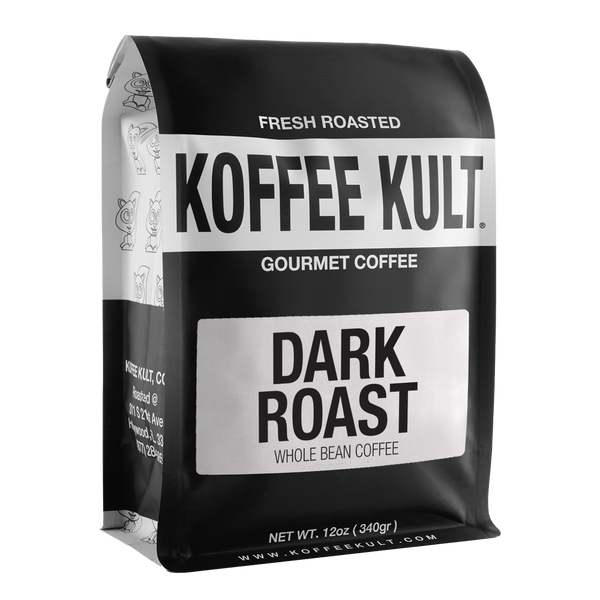
Koffee Kult's Dark Roast Coffee Beans are a reliable anchor for home espresso—full-bodied, smooth, and roasted to a level where the natural sweetness of the bean shines without tipping into burnt or ashy territory. The aroma alone when you open the bag is worth the price of admission.
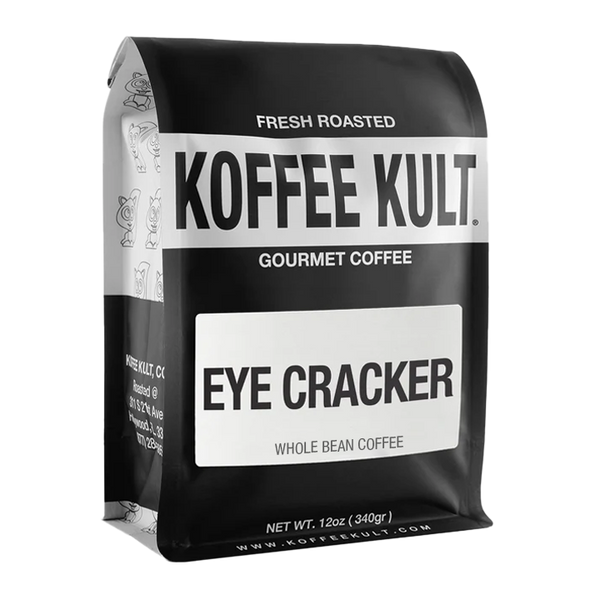
If you want something with a little more edge—brighter, bolder, built specifically for espresso—the Eye Cracker Espresso Beans are exactly what the name suggests. Bright and bold, with the kind of crema that makes you want to pull another shot just to watch it form.
For more on how roast level affects flavor and brewing, check out the Koffee Kult coffee blog—there is a lot of useful reading there if you are serious about leveling up your home setup.
Quick Tip
One Change That Improves Every Shot
If you are only going to change one thing about your espresso routine, change your grinder. A consistent, even grind is the single biggest variable between a mediocre shot and a great one. Blade grinders create uneven particle sizes that lead to uneven extraction—some parts of the puck over-extract while others under-extract, and the result tastes muddy or sour.
A burr grinder—even an entry-level one—gives you uniform particle size and the ability to make small, repeatable adjustments. Pair it with fresh beans and the technical specs above, and you will be pulling noticeably better shots within a week.
Start Here: Espresso Worth Pulling
The shift toward premium espresso is not going anywhere. If you are ready to meet it, start with the bean. Everything else follows from there.
Every bag is roasted to order at our Hollywood, FL roastery and shipped fresh. Subscribe to the Coffee of the Month Club and we will keep your espresso rotation interesting—new profiles, new origins, same obsessive attention to the roast.