



The Coffee Buzzwords Debate

In This Article
Spend five minutes in any major coffee subreddit and you'll notice a pattern. Someone posts a bag of coffee with an elaborate processing note — "double anaerobic extended maceration with thermal shock finish" — and the comments split almost immediately into two camps: the curious enthusiasts and the deeply skeptical veterans.
The conversation around processing buzzwords has reached a kind of cultural boiling point. Roasters keep introducing new techniques. Competitions keep rewarding novelty. And everyday drinkers are increasingly asking: does any of this actually taste better? We dug into the most honest corners of coffee Reddit to find out what people really think.
"Funky" vs. Defective — Where's the Line?
The most heated argument in modern specialty coffee isn't about grind size or brew ratio. It's whether a coffee that tastes like fermented fruit is a triumph of craftsmanship or a failure of quality control dressed up in trendy language.
"I can't tell if this is intentionally complex or if it just tastes like rancid booze and someone decided to charge $28 for it."— r/coffee community member
The word "funky" has done a lot of heavy lifting in specialty coffee marketing. It's used to describe everything from pleasant tropical fruit notes to genuinely off-putting fermentation gone wrong. For critics, this ambiguity is the whole problem — "funky" has become a get-out-of-jail-free card for defective processing.
Defenders of heavy fermentation argue the opposite: that controlled anaerobic and extended fermentation produce intentional complexity that skilled tasters can distinguish from actual defects. The problem, many admit, is that not all roasters — and certainly not all consumers — have the palate training to tell the difference at first sip.
Coffee defects like "ferment" were historically a reason to fail a coffee at QC. Today, some of those same flavor compounds are being deliberately amplified and sold as features. Whether that's innovation or redefinition depends largely on who you ask — and what's in the cup.
Co-Ferments & Infusions: Innovation or Just Flavored Coffee?
If anaerobic processing is controversial, co-fermentation is radioactive. The technique involves introducing external ingredients — cinnamon, fruit juice, honey, even spirits — into the fermentation environment alongside the coffee cherry. The result can be a cup that tastes dramatically like whatever was added.
"At what point does it stop being a coffee and start being a cocktail mix with coffee notes? I love blueberries. I can buy blueberries. I don't need my $40 coffee to taste like them."— r/pourover
Community skepticism runs deep here. A recurring concern is that co-fermentation provides an easy way to mask lower-quality base beans — if the cup tastes like passionfruit, you're not tasting the coffee's actual origin. Some see this as a "craze" pushed aggressively by roasters looking to justify premium price tags on otherwise ordinary beans.
Others take a more open-minded view, comparing it to the wine world's use of oak barrels or yeast strains to shape flavor. The question isn't whether influence from outside ingredients is inherently wrong, they argue — it's about transparency and intentionality. Does the roaster tell you what's in it? And does it taste good?
We believe every ingredient in your cup deserves disclosure. If a fermentation agent was introduced, you should know. We keep our processing notes transparent so you can decide what kind of coffee experience you're looking for.
Marketing Over Substance — Know Your Processing Terms
Before we can debate whether the buzzwords are earned, it helps to understand what they actually mean. Here's a plain-language breakdown of the methods most commonly debated online:
Washed / Wet
Fruit removed before drying. Clean, bright, origin-forward. Widely considered the most transparent processing for showcasing terroir.
Natural
Whole cherry dried on raised beds. Fruit-forward, heavy body. Beloved by many — but the source of much "weird syrupy" controversy.
Honey Process
Skin removed, mucilage left on during drying. A middle ground — sweetness of naturals, some clarity of washed. Yellow, red, and black honey vary by mucilage amount.
Anaerobic Fermentation
Cherries or beans fermented in sealed oxygen-free tanks. Amplifies fermentation byproducts — often lactic or tropical. The most divisive of modern methods.
Carbonic Maceration
Borrowed from wine: CO₂ floods a sealed tank, triggering intracellular fermentation. Complex and expensive. Critics say the name is used more as a price signal than a flavor signal.
The complaint online isn't that these methods don't produce distinct flavors — most agree they do. The complaint is that roasters sometimes lean on the terminology to charge $50 for a bag that tastes no better than a $22 washed Ethiopian. As one r/espresso user put it: "Carbonic maceration means nothing if the roast is sloppy."
And that last point is worth sitting with. Because here's the thing — coffee processing and fermentation are genuine craft. The way a producer manages oxygen levels, fermentation time, temperature, and moisture during processing has a direct and measurable impact on the flavor compounds and texture that end up in your cup. These aren't cosmetic choices. They are skilled decisions made at origin that can elevate a coffee from ordinary to extraordinary.
But processing alone doesn't close the loop. The roast has to honor it. A careless roast profile can undo weeks of meticulous work at the farm — burning off delicate fermentation notes or flattening the texture that careful processing built in. At Koffee Kult, that's something we take seriously. Our roast profiles are specifically structured to complement the processing and fermentation of each coffee, so those flavors arrive in your cup intact rather than scorched away. When we use a term like "anaerobic" on our packaging, it isn't decoration — it's a promise about what's actually in the bag and how we roasted to protect it.
| Term | What It Actually Means | Customer Sentiment | Price Premium? |
|---|---|---|---|
| Anaerobic | Sealed-tank, low-oxygen fermentation | Deeply split — love it or hate it | Often yes |
| Carbonic Maceration | CO₂-flooded intracellular fermentation (wine-derived) | Skeptical — seen as buzzword inflation | Frequently yes |
| Co-ferment | External ingredient added during fermentation | Mostly negative — "just flavored coffee" | Yes |
| Thermal Shock | Rapid temperature change during processing | Confused — unclear sensory impact | Sometimes |
| Extended Fermentation | Longer than typical fermentation window | Mixed — can be excellent or defective | Varies |
The Natural Processing Problem
Natural coffees deserve their own section because they sit at the heart of the modern taste divide. Unlike the newer processing experiments, naturals have been around for centuries — particularly in Ethiopia, where the dry method predates specialty coffee as a concept. But their reputation has become complicated.
"I've had so many naturals at this point that they all blur together. Blueberry blueberry blueberry. I get it. What else have you got?"— r/pourover
The critique isn't that naturals are bad — even the skeptics agree that a well-processed, well-roasted natural can be extraordinary. The critique is that the category has become homogenized. "Jammy and fruit-forward" has become a shorthand that covers everything from genuinely exceptional lots to mediocre beans saved by a thick, syrupy body that papers over weaknesses.
"Palate fatigue" is a phrase that comes up repeatedly. After enough heavily fermented naturals, many drinkers find themselves craving the clarity of a clean washed coffee — not because naturals are inferior, but because the flavor profile becomes predictable and one-dimensional at a certain point.
Washed Coffee: Still the Gold Standard?
In the online debates, washed processing often plays the role of the underdog that everyone secretly respects. While it rarely generates the excitement of a new anaerobic lot, it holds a quiet authority in the community as the method most likely to tell you the truth about a coffee.
With fruit fully removed before fermentation, washed coffees put the bean's intrinsic quality front and center. There's nowhere to hide — which is exactly why skilled producers and experienced tasters often treat washed lots as the clearest measure of a farm's true potential.
That said, "washed = better" is itself a contested claim. Some argue the framing reflects a Eurocentric specialty bias toward brightness and acidity that doesn't fairly value the sweetness and body that other methods produce. The question of what counts as "pure origin character" may itself be culturally loaded.
The more nuanced community consensus: washed is neither superior nor inferior to other methods — it's simply the most transparent. If you want to taste the terroir, washed is your clearest window. If you want a specific flavor experience, other methods offer that too. The problem arises when those other methods are presented as evidence of quality rather than as deliberate stylistic choices.
How to Navigate the Buzzword Landscape
🔍 Ask About the Base Bean
Before you pay a premium for processing, ask what the bean scores without it. Processing can enhance — but it can't fundamentally rescue a weak lot.
📋 Demand Transparency
Reputable roasters disclose what was added and when. If a co-ferment uses cinnamon or fruit, it should be on the label. Vague "experimental process" notes are a yellow flag.
🧠 Trust Your Palate
No processing method is objectively better. If a heavily fermented anaerobic delights you, that's a real and valid response. Don't let Reddit consensus override your own cup.
🔄 Rotate Deliberately
Palate fatigue is real. Alternating between washed, natural, and experimental lots keeps your sensory baseline sharp and prevents any single flavor profile from feeling boring.
Our Take
The frustration with coffee buzzwords is understandable — and in some cases, fair. When terms like "carbonic maceration" or "extended anaerobic fermentation" are slapped on mediocre bags to justify premium prices, skepticism is a reasonable response. But dismissing the language entirely misses something important: these words exist because they describe real things. Flavor notes and processing method callouts aren't invented to sound impressive. They're an attempt to communicate why a coffee is complex, where that complexity came from, and what you can expect in the cup. A well-used processing descriptor is a form of honesty — it tells you the story of how that coffee became what it is.
The answer isn't to dismiss experimentation. Some of the most compelling coffees we've tasted came from unconventional processing. The answer is to hold roasters to a higher standard of honesty: tell us what you did, why you did it, and what it should taste like. Let the cup make the argument, not the label.
At Koffee Kult, we believe in processing that serves the coffee — not the other way around.
"The best processing is the one that gets out of the way and lets the bean speak."— A sensible corner of the coffee internet
Try the Difference for Yourself
The best way to form your own opinion on processing debates is to drink side by side. Here are two of our current favorites at opposite ends of the spectrum.

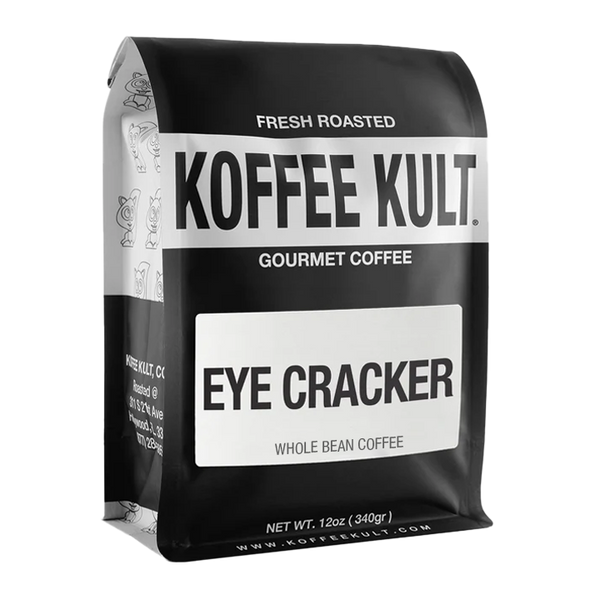
Eye Cracker
A bright, expressive natural lot that showcases how fruit-forward processing, done right, can sing without screaming.

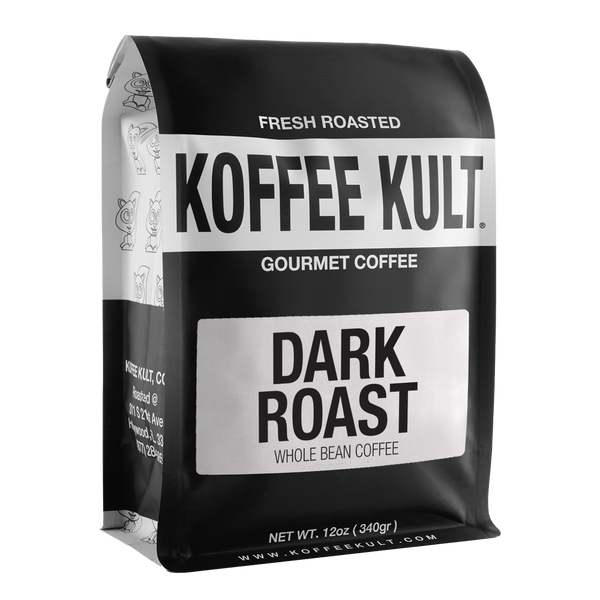
Dark Roast Blend
When you want structure over spectacle. Bold, clean, and honest — the kind of cup that reminds you why the basics endure.