



Cold Coffee Is Permanent (Not Seasonal)

Cold brew, iced pour-overs, and flash-chilled espresso aren't summer drinks — they're year-round rituals with their own flavor science.
The "Seasonal" Myth — And Why It's Wrong
Every spring, cold brew reappears on café menus like a migratory bird. Every September, it quietly vanishes. The message, repeated so often it feels like fact: cold coffee is a summer thing.
It isn't. It never was. Cold brew was consumed in Japan centuries before it became a stateside phenomenon, and neither Kyoto winters nor Norwegian coffee culture got the seasonal memo. The "summer only" framing is a marketing artifact, not a flavor truth.
The reality is more interesting: cold extraction produces a chemically distinct beverage from hot brewing — one with its own flavor compounds, its own ideal roasts, and its own rituals. Those characteristics don't expire when temperatures drop. If anything, the deep chocolate and caramel sweetness of a well-made cold brew pairs beautifully with the cozy heaviness of fall and winter eating.
"Cold extraction produces a chemically distinct beverage — one with its own flavor compounds, its own ideal roasts, and its own rituals."
The question isn't when to drink cold coffee. It's how to make it exceptional, whatever the weather outside.
The Flavor Science of Cold Extraction
Hot water is a solvent. It strips a coffee ground aggressively — pulling oils, acids, and volatile aromatic compounds all at once, in a window of seconds to minutes. The result is complex, bright, and immediate. But it's also chemically turbulent. Some of that volatility reads as bitterness or harsh acidity in the cup.
Cold water is patient. Brewing at room temperature or in the refrigerator over 12 to 24 hours, it favors lower-molecular-weight sugars and smooth, fat-soluble compounds over the chlorogenic acids and certain bitter phenolics that heat extracts easily. The result is coffee that's naturally sweet, round, and low in perceived acidity — without any milk, sugar, or manipulation.
The Chemistry in Plain Terms
Cold brew's smoother taste isn't just a perception — it's measurable. Studies show cold brew coffee has significantly lower titratable acidity than hot-brewed coffee, which matters for flavor and for coffee drinkers with acid sensitivity.
- Lower chlorogenic acid = less bitterness and perceived harshness
- More lipid extraction over time = richer mouthfeel and body
- Reduced volatile aromatics = less floral/citrus brightness, more chocolate/caramel depth
- Lower caffeine per ounce when diluted — though concentrates can run high
This isn't a compromise. It's a different expression of the same bean. A coffee with bright stone-fruit notes hot can become a chocolaty, almost dessert-like experience when cold-brewed — and that's the point.
5 Cold Coffee Methods Worth Knowing
Cold coffee isn't one thing. It's a family of techniques with meaningfully different results. Here's a breakdown of the five methods every serious coffee drinker should understand.
Traditional Cold Brew
Coarsely ground coffee steeped in cold or room-temp water for 12–24 hours, then filtered. Produces a concentrate with heavy body and deep sweetness. The most forgiving method for beginners.
Kyoto / Dutch Drip
Ice water drips slowly through a bed of grounds over 6–12 hours. Creates a delicate, nuanced cup with more aromatics than immersion — closer to a cold-version of pour-over in character.
Iced Pour-Over
Brew hot, directly onto ice. The rapid chill locks in bright aromatics before they can oxidize or fade. Best for light, fruit-forward coffees where you want acidity and complexity preserved.
Flash-Chilled Espresso
Pull a standard or ristretto shot, immediately poured over a small amount of ice. Retains espresso's intensity and crema while becoming perfectly chilled. The base for the best iced lattes.
Nitro Cold Brew
Cold brew charged with nitrogen gas through a pressurized tap. Creates a cascading, Guinness-like pour with a creamy, velvety texture and naturally sweet taste — no ice or milk needed.
Cold vs. Hot: What Changes in the Cup
It's not just temperature — it's a fundamentally different extraction. Here's what shifts when you go cold.
| Characteristic | Hot Brew | Cold Brew | Iced Pour-Over |
|---|---|---|---|
| Acidity | High — bright, lively | Low — round, smooth | Medium — preserved but softened |
| Sweetness | Moderate | High — chocolatey, caramel | Moderate to high |
| Body | Medium | Heavy, syrupy | Light to medium |
| Aromatics | Vibrant, volatile, immediate | Muted, subtle, deep | Bright, locked in by chill |
| Bitterness | Present (roast-dependent) | Very low | Low |
| Brew Time | 2–5 minutes | 12–24 hours | 3–4 minutes (brew time) |
| Best Roast | Light to medium | Medium to dark | Light to medium-light |
"A coffee with bright stone-fruit notes hot can become a chocolaty, dessert-like experience when cold-brewed — and that's the point."
Brew Tips for Every Season
Cold coffee succeeds or fails on a handful of variables. Get these right and every batch rewards you.
Grind Coarse for Cold Brew
Use a coarser grind than drip — closer to French press territory. Fine grounds over-extract bitterness during the long steep and make filtering a nightmare.
Water Quality Matters
Cold brew amplifies the character of your water. Filtered water that's slightly mineral (not distilled, not hard) produces the cleanest, sweetest cold brew.
Steep in the Fridge
Room-temp steeping is faster (12–15 hours) but fridge steeping (18–24 hours) produces a cleaner, more nuanced cup with less risk of off-flavors from ambient temperature swings.
Ice Pour-Overs: Reduce Water
When brewing onto ice, replace roughly 40% of your brew water with ice in the vessel. This prevents dilution while still rapidly chilling your coffee the moment it hits the cup.
Make Concentrate
Brew at 1:4 or 1:5 coffee-to-water ratio for concentrate. Store up to two weeks in the fridge, then dilute 1:1 to 1:2 with water, milk, or a milk alternative when you're ready to drink.
Flash-Chill Espresso Right
Add a single large ice cube to your espresso cup before pulling the shot. One large cube melts slower and dilutes less than several small ones, keeping flavor intensity intact.
The Best Beans for Cold Coffee
Not every coffee performs equally when cold. Bright, high-acidity light roasts can fall flat in a long cold steep — their best features (delicate floral notes, citrus snap) need heat to express themselves fully. Medium and dark roasts, on the other hand, are built for this.
For cold brew, look for coffees that lead with chocolate, brown sugar, nuts, and dried fruit. These compounds extract efficiently in cold water and hold up through dilution. Process matters too: naturally processed and honey processed coffees tend to carry more residual fruit sweetness that cold brew amplifies beautifully.
Cold Brew Roast Cheat Sheet
- Dark roast cold brew → Deep chocolate, low bitterness, heavy body. Best for black concentrate or adding milk.
- Medium roast cold brew → Balanced, caramel sweetness, slight fruit. Versatile — great straight or mixed.
- Natural process cold brew → Fruit-forward, syrupy, almost wine-like. A revelation for cold brew skeptics.
- Espresso blend iced → Designed for balance under pressure — holds up perfectly in iced latte format.
The takeaway: cold coffee rewards intentional bean selection. The same bag you love for pour-over may not be the best choice for a 20-hour steep — and that's okay. This is an excuse to explore a wider range of what your roaster offers.
Brew Cold with Koffee Kult
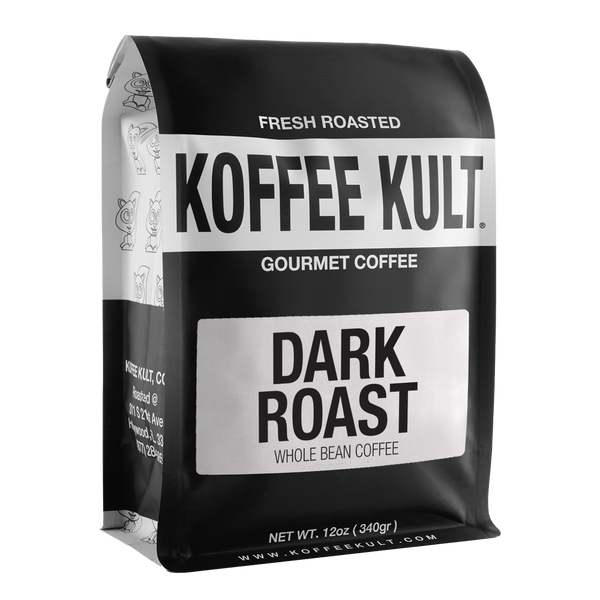
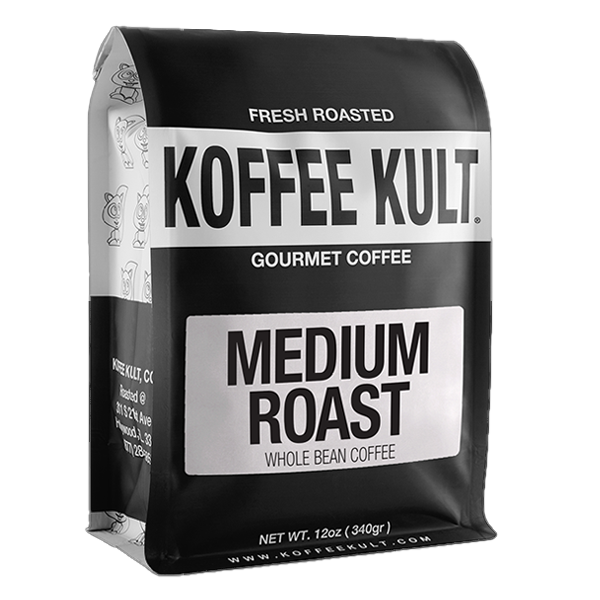
These two roasts were practically made for cold extraction — one dark and brooding for immersion brews, one medium and complex for iced pour-overs and flash-chilled espresso.

Dark Roast
Our signature dark roast delivers rich chocolate, cinnamon, and heavy body — all the qualities that shine through a cold steep. Low bitterness, high reward.

Thunder Bolt
A medium roast with notes of brown sugar, dark fruit, and clean finish. Flash-chill it over ice to lock in aromatics — or use it as the base for your best iced latte yet.